Most homeowners don’t think about their roof until something goes wrong. A water stain on the ceiling, a shingle in the backyard after a windstorm, or a neighbour’s brand-new roof that suddenly makes yours look a lot older than you remembered. Sound familiar?
The truth is, your roof has a shelf life — and in Canada, that lifespan gets pushed harder than most people realize. If you’re not sure how long does a roof last in Canada, or whether yours is getting close to the end, this article will walk you through what you actually need to know.
Canada’s Weather Does a Number on Your Roof
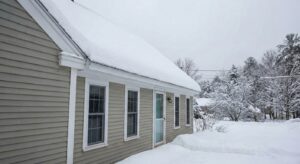
Let’s be real — our winters are brutal. And it’s not just the cold. It’s the cycle of freezing, thawing, freezing again that quietly does damage over time. Add in heavy snow sitting on the roof for weeks, ice building up along the eavestroughs, summer heat pushing attic temps well past 60°C, and the occasional windstorm that peels back anything that’s already loose — and you start to understand why roofs in Canada age faster than the manufacturer’s warranty might suggest.
In the GTA — whether you’re in Oakville, Brampton, Mississauga, Toronto or anywhere in between — you get the full experience. It’s a tough environment for any roofing material, and it’s why we always recommend homeowners get a proper roof inspection before assuming everything is fine. Relying on American lifespan estimates doesn’t work here — the context is just different.
Shingles Roof Lifespan: The Numbers You Should Know
Asphalt shingles are what you’ll find on the overwhelming majority of Ontario homes — and for good reason. They’re affordable, they work, and there’s a wide range of quality levels to choose from. But shingles roof lifespan isn’t a one-size-fits-all number. It depends a lot on what type of shingle was installed and how well the job was done in the first place.
3-tab shingles were the standard on most homes built through the 80s and 90s. They’re thinner and lighter, and in our climate, you’re realistically looking at 15 to 20 years — sometimes less if the attic ventilation was never great.
Architectural shingles are what most roofers use for replacements today. Thicker, more durable, and better looking. Properly installed, they’ll give you 25 to 30 years in Canadian conditions. This is the sweet spot for most GTA homeowners — good performance without going overboard on cost. If you’re due for a replacement, check out our roof replacement service to see what’s involved.
Premium and designer shingles can stretch beyond 30 years, but the price jump is significant. For most people, the upgrade to premium architectural is where the value starts to taper off.
One thing that trips a lot of homeowners up — a 30-year warranty doesn’t mean the roof will last 30 years without any issues. Most warranties are prorated and come with fine print around ventilation, installation standards, and maintenance. Read them carefully before assuming you’re fully covered.
What If You Have Something Other Than Shingles?
Asphalt is king, but it’s not the only option. Here’s how other common roofing materials hold up in Ontario:
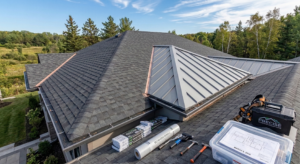
Metal roofing is probably the best long-term performer we work with. A standing seam metal roof can last 40 to 70 years, handles snow and ice far better than shingles, and needs very little maintenance once it’s on. The upfront cost is higher, but over the life of the roof, the math often works in your favour.
Cedar shake looks beautiful but demands more attention. You’re looking at 25 to 30 years if it’s well maintained — but moss, splitting, and moisture issues can cut that down significantly if it’s ignored.
Flat and low-slope roofing is common on garages, additions, and modern builds. TPO and modified bitumen are the go-to materials, and they typically last 15 to 25 years. Drainage is the critical factor — a flat roof that doesn’t drain properly won’t come close to that upper range. Our residential roofing team can walk you through the best option for your specific build.
Your Roof Will Tell You When It’s Done — If You Know What to Look For
Age is one indicator, but it’s not the only one. We’ve seen 18-year-old roofs that still had years of life left, and 12-year-old roofs that needed immediate replacement because of poor installation or zero maintenance. Here’s what to actually watch for:
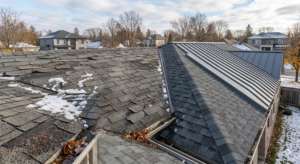
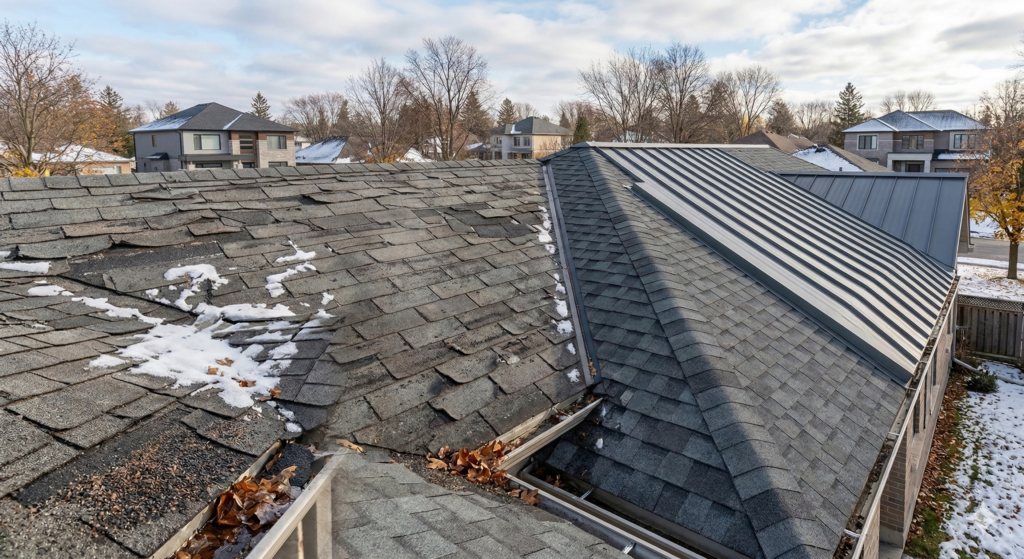
Curling or cupping shingles. When the edges start lifting or the middle starts buckling, the shingles are breaking down. Water gets under them, and the damage spreads from there.
Granules in the gutters. Those gritty, sand-like bits collecting in your eavestroughs are the protective coating wearing off. A little early on is normal. A lot on an older roof is a clear sign things are breaking down. While you’re at it, make sure your eavestroughs are clean and functioning — blocked gutters speed up roof damage significantly.
Missing or bald shingles. If patches of your roof are bare or shingles are coming off in the wind, those spots are exposed right now. It only takes one good rainstorm to turn a roofing problem into a water damage problem. A quick roofing repair can buy time — but only if the rest of the roof is still in decent shape.
Light or moisture in the attic. Take a look up there on a bright day. If you’re seeing daylight through the boards, or you notice damp insulation and dark staining, water is already getting in somewhere.
The roof is sagging. Don’t wait on this one. Sagging — especially along the ridge line or in the middle of a slope — means there’s likely structural damage underneath. This goes beyond a shingle repair. Book a professional roof inspection right away.
Repair or Replace? Here’s How We Think About It
This is the question we get most often, and the honest answer is: it depends on the age and overall condition of the roof, not just the spot that’s causing trouble.
If the damage is limited to one area and the rest of the roof is solid, a targeted roof repair makes sense. But if the roof is already 20-plus years old, has widespread granule loss, and is showing signs of wear in multiple places — putting money into a repair is often just delaying the inevitable. A full roof replacement now usually costs less in the long run than two or three partial repairs followed by a replacement anyway.
A good roofer will tell you which one you actually need — not which one generates more work. That’s something we take seriously at Ontario Tech Roofing.
Bottom Line: Don’t Wait Until There’s a Problem
So how long does a roof last in Canada? Most asphalt shingle roofs will give you 20 to 30 years depending on the material and how well it was installed and maintained. Metal roofs go much longer. Flat roofing runs a shorter cycle.
But the number that matters most is yours — not the average. If your roof is pushing 20 years, it’s worth getting a professional set of eyes on it before something forces your hand. Catching a problem early is almost always cheaper than dealing with it after water has been sitting in your walls or attic for who knows how long.
We’ve been doing this across the GTA — Oakville, Toronto, Mississauga, Brampton, Burlington, Hamilton and everywhere in between — since 1998. Whether you need a new roof, a repair, or just want to know where things stand, we’ll give you a straight answer with no fluff and no pressure.
Book your free roof inspection online or call us at 905-616-4408. It takes 20 minutes and could save you a lot of money.